Machine Time
The first music-making machines were built not for making music, but to keep time.
The clock has been twinned with sound and song since its beginnings in ancient China—a water-powered mechanism that struck a bell—through its evolution into the ubiquitous towers in Europe that chimed on the hour. Thus it was the watchmakers of eighteenth-century Switzerland who created the innards for the earliest music boxes, in which a coiled spring rotated a cylinder with bumps on its surface, bumps that struck metal tines that produced musical tones spaced in time. Another machine, powered by spring and pendulum, was soon created to help musicians themselves measure time more precisely: the metronome.
The dawn of the Machine Age brought with it this new conception of time, one disconnected from biological rhythms and instead externalized to devices against which the individual, human sense of time could be measured and regimented. And with machines came new inventions to automate music-making. As the piano industry boomed in the late 1800s so too did the sales of new “pianolas”—pianos that played themselves, powered by pneumatics, and programmed with long paper rolls, long grids of holes that triggered the keys, working on the same principles as the first music boxes: a wind-up mechanism that was able to trigger sounds in sequence.
These developments ultimately led to the first electronic music machines that used circuitry to generate and trigger sounds. In 1920, the Russian inventor Leon Theremin created a device that produced a wavering tone that could be raised or lowered in pitch by moving his hands within the machine’s electromagnetic field. Sound synthesis was born. But Theremin also worked on ways to remove his hands from the process, creating an early version of a drum machine with his Rhythmicon, a machine that played itself, the first electronic sound sequencing .
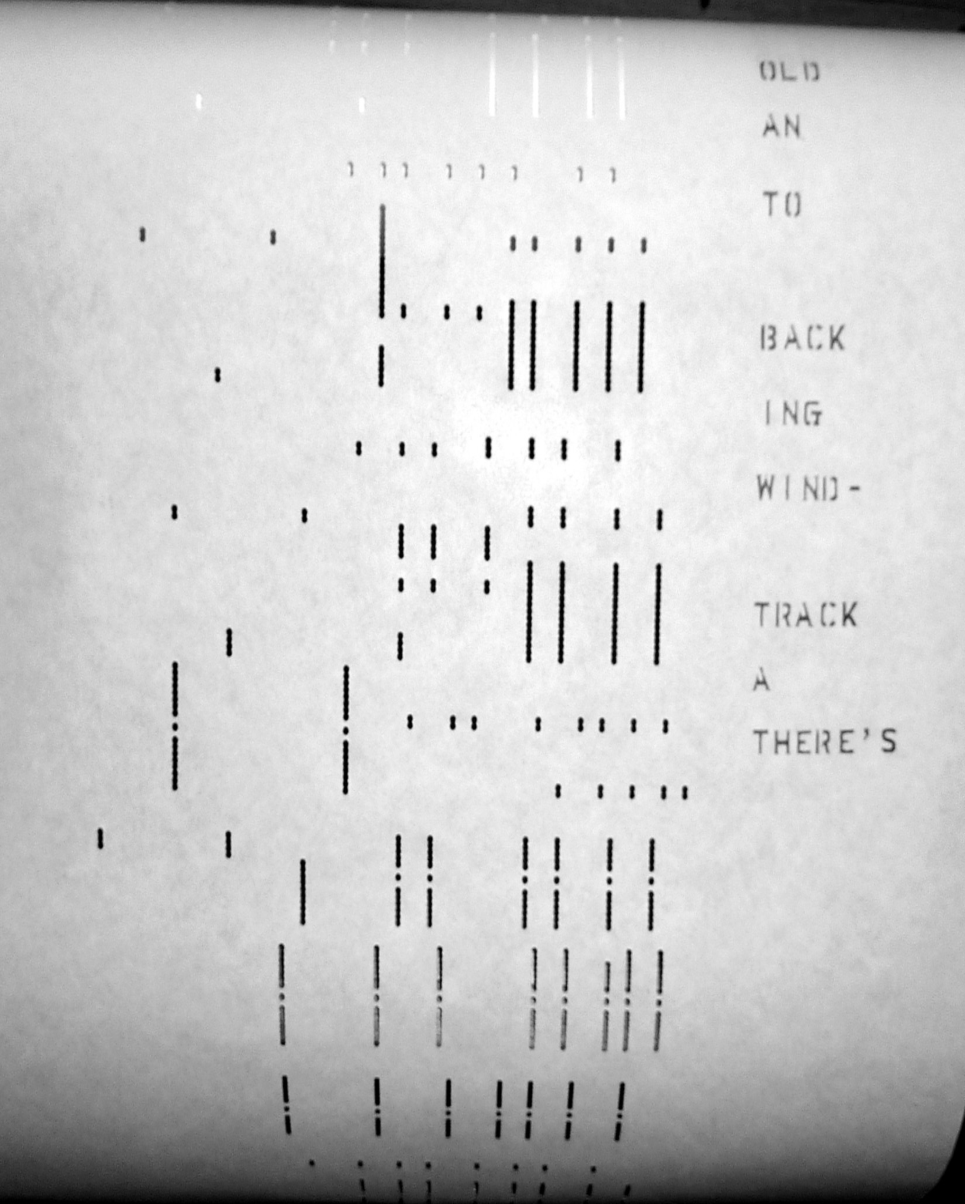
In 1952, at his New York laboratory, Manhattan Research, Inc., Raymond Scott took those concepts further. Scott created a keyboard version of the Theremin called the Clavivox, an endeavor in which he was assisted by a young technician, Bob Moog. The sounds the Clavivox generated were uncanny, and marketed that way. An early advertisement proclaimed: “Raymond Scott Clavivox can sound ‘something’ like a vocalist, not a voice; a clarinetist, not a clarinet; a violinist, not a violin.” Like Theremin, Scott sought to make playing automatic, creating a device he called the “Wall of Sound”: a machine six feet tall and thirty feet wide composed of hundreds of step relays, the same switches that powered telephone exchanges. Scott set these switches in different patterns to trigger sounds from several Clavivoxes and other instruments. It was, in effect, the first programmable sound sequencer; a machine that, once you told it what to do, played itself.
Scott went on to use these machines to create some of the first commercial recordings of electronic music—some unsuccessful, like the eerie 1963 album Soothing Sounds for Baby ; some profitable, like jingles for General Motors, IBM, Bendix, and the cosmetics company Lightworks. What is the magic that makes one’s eyes / sparkle and gleam, light up the skies? singer Dorothy Collins asked, as Scott’s machines gurgled a gentle, computerized arpeggio. The name of the game is Lightworks. Though Scott was a trained musician and traditional bandleader—he’d composed much of the Looney Tunes and Merrie Melodies music for Warner Bros.—his recorded efforts made him something else: one of the first professional electronic producer-composers.
The otherworldly sounds of Scott’s devices were not meant to be facsimiles of traditional musical instruments. They were automatic instruments for an atomic generation who liked the robot’s synthetic voice, who fetishized the future and all its bleep-bloop sounds, evoking computers, satellites, spaceships. Scott’s machines made music that sounded like machines.
By the 1960s, electronic instruments had become available to both professionals and amateurs, and their use began to spread. The Wurlitzer Side Man was the first commercially produced drum machine. Scott’s assistant, Bob Moog, created the pioneering synthesizer that bears his name; it ended up on the recordings of Motown artists like the Supremes and, across the Atlantic, on records by the Beatles. The Moog was limited: it was monophonic, which meant that it could generate only one note at a time— great for creating melodies, but not for playing chords. By the end of the decade, a duo of musicians—Bob Margouleff and Malcolm Cecil—would string a number of Moog modules together to create the world’s first polyphonic synthesizer, TONTO. At the dawn of the 1970s, Stevie Wonder, the master of harmony, would be the first artist to create a body of work with it. Meanwhile, the funk artist Sly Stone began substituting a drum machine called the Rhythm King for traditional drums in his music. A few years later, a group of German musicians who called themselves Kraftwerk—German for “power station”—forged synthesized and human sounds into an aesthetic they dubbed “Man Machine.” Kraftwerk posed as robots making music that sounded as if it were made by robots posing as men. Another producer working in Germany, Giorgio Moroder, merged disco with machines on a 1976 track for Donna Summer, “I Feel Love.” Moroder fashioned almost every sound on the track with a Moog Modular synthesizer, which now had its own onboard sequencer, enabling Moroder to program the bass line into the machine and have it play back on its own with a surreal, robotic consistency.
The backlash against disco drew much of its energy from white audiences hostile to disco’s Black and gay subcultures, but there was an aesthetic revolt, too. For many people weaned on classic rock and soul, the synthesizer became the object of outrage. This ire was misdirected. These same music fans often had no problem with the Who’s or Stevie Wonder’s use of synthesizers on their most beloved albums. What the anti-disco crowd was repelled by was not so much the sounds of the synthesizer as the unvarying, “soulless” silences of the sequencers employed to trigger them.
Despite the dissent, by the end of the 1970s the sound of popular music was on the precipice of an electronic transformation because of these two futuristic innovations—the synthesizer that generated tones and percussion, and the sequencer that ordered those synthetic events in time. And behind the synthesizer and sequencer were the same two elements that composed the ancient ancestors of these music machines: the thing that gets struck, and the clock that times the strike.
Detroiters had a natural affinity for unnatural sounds. Berry Gordy literally composed his first songs to the rhythms of the assembly line. At the height of Motown’s success, Gordy hired Raymond Scott to develop an advanced music machine called the Electronium. George Clinton and his funk futurists embraced the synthesizer, pushing its sounds squarely into American dance music. And as mechanized sounds permeated popular music in the late 1970s and early 1980s, they found a particularly enthusiastic audience in the
Motor City, fostering a local underground club scene in which disc jockeys played a multigenre melange of machine music that they called “progressive dance.” The community was bolstered by a number of high school social clubs, run by teens who fetishized the lives and fashions of the European jet set, their party names an alphabet soup of continental high-fashion labels, boutiques, and publications: Arpegghio , Avanté , Charivari , Ciabittino , Courtier , Giavante , GQ , Reminiques , Schiaparelli . Their functions started with house parties and moved into small nightclubs.
While some teenagers emphasized the flash, others perfected the footwork. This countermovement had a lot to do with Detroit geography. The path that Woodward cut into the Michigan wilderness divided Detroit into west and east sides, and many of the progressive dance social clubs and their high-fashion-loving followers came from the West Side, which, in the 1980s, signified that your family might be a little more well-off, that your house might be a little nicer, your high school a little better. These kids were called the “preps.” But there were others from Detroit’s East Side and deteriorating swaths west of Woodward who had a love of futuristic dance music without the pretense. The preps called them, somewhat derisively, “jits.”
The name came from local dance crew the Jitterbugs. At its core were three brothers—Tracey, John, and James McGhee—who developed synchronized routines that combined constrained, fast footwork with tumbling leaps, the acrobatic, amped successor to the Motown choreography of groups like the Temptations. The Jitterbugs might have remained obscure had it not been for the kindness and encouragement of Dewitt Yancey’s protégée, Kim Weston. The McGhee brothers enrolled in Weston’s annual Festival of the Performing Arts in 1978, and she gave them the space and time to perfect their craft, the vision to see themselves as artists, and the connections to become paid professionals. They performed at public events and on TV shows like Nat Morris’s The Scene , exposing the entire metroplex to their moves: the Walk, the Jazzit, the Tone, the Strike. Detroit kids condensed them into one catchall phrase: the Jit. To this arsenal of dance, the children of the city added others, composing a physical vocabulary that only Detroit spoke: the Rambisco. The Errol Flynn.
At first, the mix of west and east, prep and jit, on the progressive dance floors was fraught, but the preppy posturing dwindled as the scene focused less on fashion and more on the music, of which Detroit was now starting to produce its own, homegrown variety. In 1981, the Electrifying Mojo began playing a local record, “Sharevari,” by a group called A Number of Names, and went on to champion other local records, including “Alleys of Your Mind,” released in 1981 by Cybotron.
Detroit’s electronic music scene had a symbiotic relationship with those of two other cities. In New York they dubbed their electronic dance music “electrofunk” or simply “electro,” ignited in 1982 by Afrika Bambaataa’s “Planet Rock,” a drum machine–powered reworking of Kraftwerk’s “TransEurope Express.” In Chicago they called it “house,” fueled by the 1984 track by Jesse Saunders, “On and On.” And in Detroit, a 1984 track by Cybotron, “Techno City,” would be the first mention of the word from which the local music eventually took its name. These three genres—New York electro, Chicago house, and Detroit techno—were intertwined, but the Detroit variant leaned into the ethereal, the mechanical, the political, the futuristic. The children of Motown found a soul in the machine.
In the 1980s, every kid from Detroit grew up with techno. But there was another kind of machine music—unique to New York City and made on different tools altogether—that gripped the imaginations of a select group of Detroiters.
In 1937, the experimental composer John Cage predicted that the same machines invented for music reproduction —the record player and the radio —could and would actually be used for music production . Two years later, in 1939, Cage created a piece called Imaginary Landscape No. 1 , in which he used three different turntables as part of a musical performance.
The idea that a disc jockey could be a musician, and that the contraptions of their trade—the turntable, the microphone—could be their instruments, only came into full fruition in the 1970s, in a place experiencing, like Detroit, a kind of deconstruction.
A young DJ from the Bronx, Clive Campbell, performing at house and park parties as Kool Herc, created a turntable technique in 1973 called the “merry-go-round,” in which he would play only brief portions of funk and soul records—the “breakdown” sections that featured solely the rhythm section, the “best” parts of the records for dancers. Herc did this by using two record players and a mixer to switch from one record to the next in rapid succession. By slowing down or speeding up his turntables, he could synchronize the tempos of the two songs and “match” their beats. Other DJs throughout the borough built on Herc’s techniques. Joseph Saddler, who went by Flash, developed what he called “clock theory” to use the rotation of the vinyl records to ensure precise timing; rubbing, catching, and releasing the vinyl to create percussive, melodic, and harmonic effects; and using two copies of the same record to extend the typically short “break” sections into infinite loops. The techniques spread to all five boroughs of New York City, the birth of a new culture that would later be called hip-hop. The breakbeat scene engendered its own dance culture, breakdancing or B-boying.
The street DJs of New York began a collective search for the records that had the best “breaks.” They dug them out of parents’ old record collections or found them in bins at local record stores. Their discoveries were assembled gradually into a canon of break records, many of them obscure to the general public but known to every DJ for the vital moments within them: The first seven seconds of the Incredible Bongo Band’s 1973 remake of the Shadows’ “Apache.” Two minutes and thirty-eight seconds into the 45-rpm single of James Brown’s “Funky Drummer (Part 2),” released in 1969. Four minutes and twenty-nine seconds into James Brown’s “Give It Up or Turnit a Loose”—the faux-concert version that appears on his 1971 Sex Machine album, not the one released as a single two years earlier. If you were a serious DJ, you needed these records in your repertoire.
As the party DJ became an instrumentalist, busy juggling records, the work of exhorting the crowd over a microphone passed to a “master of ceremonies.” The rhymed routines of the MCs became as sophisticated as those of the DJ, and the “rapping” part of this new culture soon eclipsed its musical innovations. It’s not surprising that the first successful hip-hop song, released in 1979, was called “Rapper’s Delight,” its music a breakbeat replayed by a band of traditional musicians rather than played from the record itself. In the recording studio during hip-hop’s early days, the disc jockey’s turntables were mostly silent. But the drum machine made the DJ a programmer, a producer, a beatmaker. The machine’s takeover of hip-hop began in 1982 with Afrika Bambaataa’s “Planet Rock.”
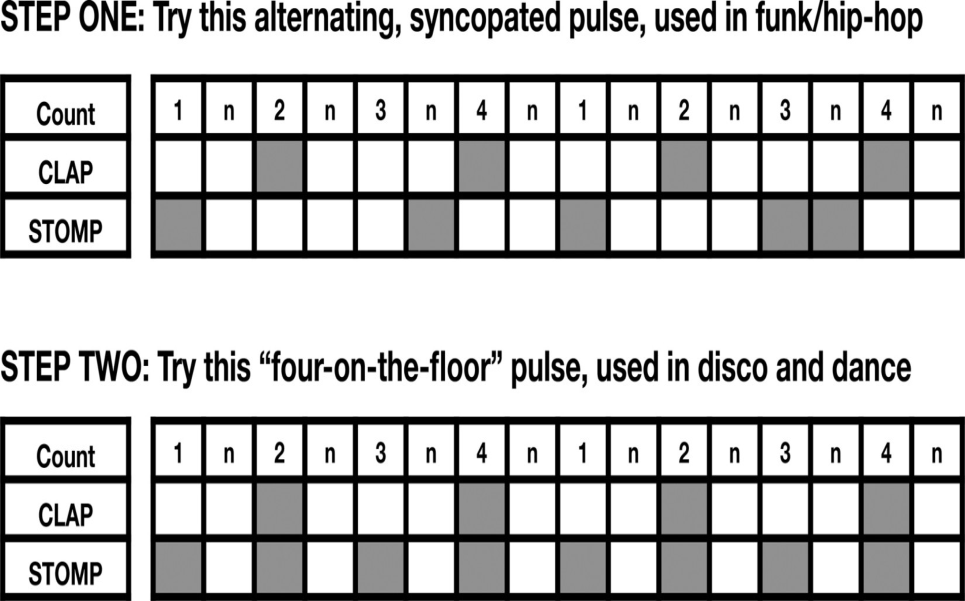
This one song marked a fork in the hip-hop family tree. Of the records that followed, the ones that skewed uptempo for dancers were called electro. Electro’s pulse was more even-keeled. Electro’s cousins, house and techno, emphasized a “four on the floor” feel—meaning a kick drum playing on all four beats—reminiscent of Motown and its successors, Philadelphia soul and disco. The other branch, a slower machine sound that leaned downtempo for rappers, sloped toward the One, emulating the funky feel of James Brown and George Clinton. This school of production was established in large part by the Queens programmer-musician Larry Smith in 1983 with the song “Sucker M.C.’s” by Run-DMC. The stark track contained only three musical elements—rhymes from Joseph “Run” Simmons and Darryl “DMC” McDaniels; sounds from a drum machine; and turntable rubs performed by DJ Jam Master Jay.
Try it yourself: FUNK VS. DISCO/PROGRESSIVE DANCE
Smith, the following year, would be responsible for another minimal, drum machine–driven rap song by Whodini, “Big Mouth.”
Both songs riveted ten-year-old James Dewitt Yancey in Detroit, introducing him to the unfamiliar East Coast vocabularies and disciplines of the drum machine, the turntable, and the MC.
Though New York hip-hop would have a sizable impact on Detroit music, it wasn’t quite seismic. Detroit’s hip-hop fans remained a creative minority. Still, most of Detroit’s young music-makers shared one thing—the gift of space, made possible by the sprawl of the city as it emptied out. Attics and basements became greenhouses for a new generation of musicians.